Country guide
Vietnam
What a Finnish citizen needs to know about visas, health and everyday life in Vietnam.
Updated 22 November 2026 (Europe/Helsinki). The 45-day exemption is in force until 14 March 2028, unless the decision is changed.
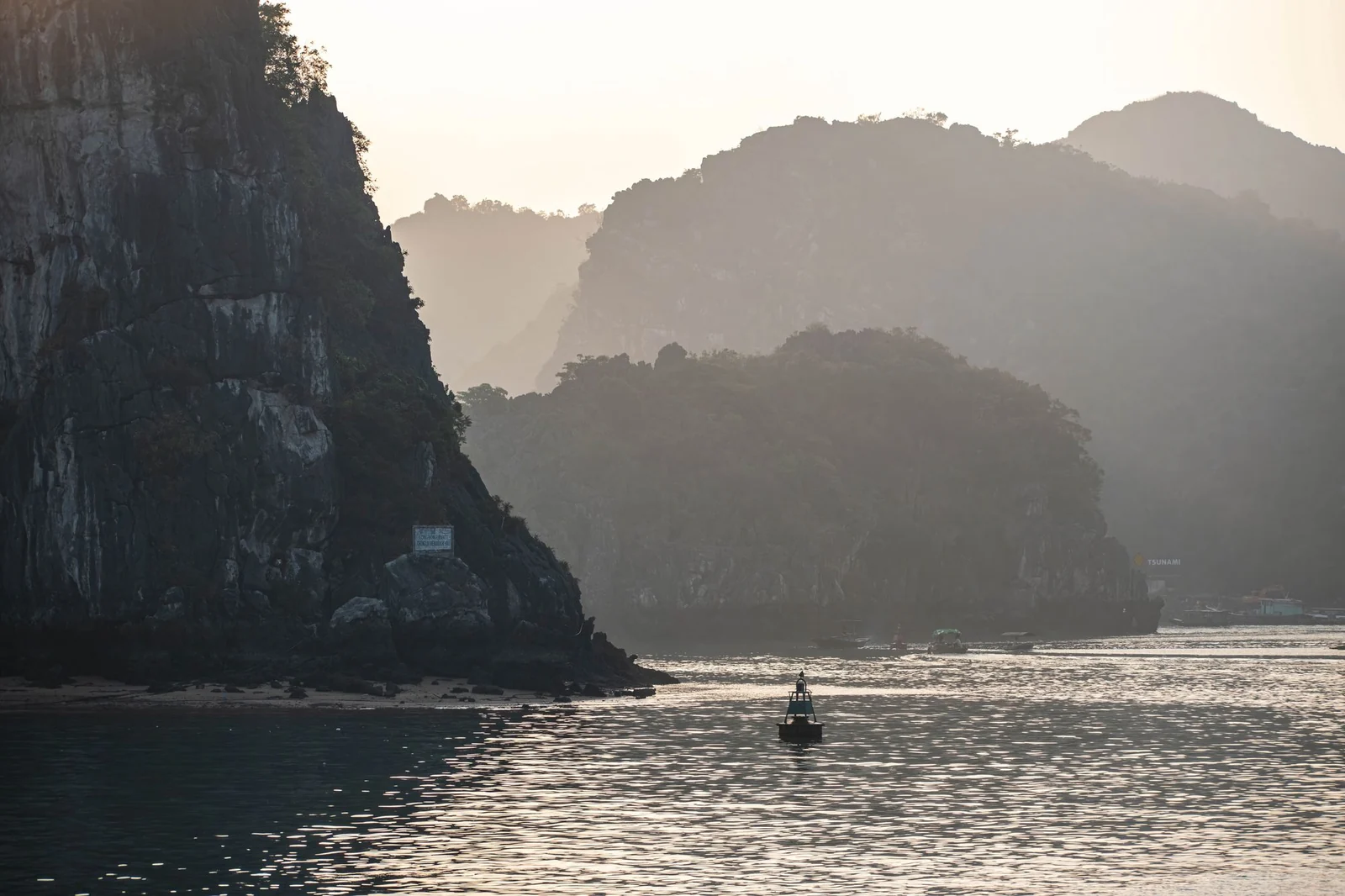
Photo: Karolina / Pexels
Visa and entry
Vietnam government decision 44/NQ-CP (7 March 2025) exempts Finnish citizens from visas from 15 March 2025 to 14 March 2028. Temporary stay is 45 days from the date of arrival, regardless of passport type and the purpose of arrival, if the other entry conditions are met. Source: Vietnam’s embassy in Japan, English notice of the decision; the original decision is available on chinhphu.vn.
If 45 days is not enough, an e-visa can be applied for on the official portal evisa.gov.vn. According to Vietnam’s tourism authority (19 February 2025), an e-visa can be for up to 90 days, single or multiple entry, and the fee is USD 25 (single) or USD 50 (multiple). The fee is not refunded if the visa is not granted. Check the price and border crossings on the portal, because the list has expanded.
The Ministry for Foreign Affairs (8 June 2026) says Vietnam is moving to an electronic arrival form during 2026. Check the current address and whether completion is mandatory before you travel.
The Ministry notes that use, possession and import of e-cigarettes is illegal (fines according to the notice about 3–5 million dong). Do not leave your passport as a deposit when renting a vehicle.
Vaccinations and health
Terveyskirjasto (Vietnam, 18 November 2024) recommends hepatitis A and a check of basic cover. Typhoid, Japanese encephalitis (rural areas, especially May–October in the north) and rabies are considered individually. Malaria prophylaxis is usually not needed; typical tourist destinations and large cities (for example Hanoi, Ho Chi Minh City, Da Nang, Nha Trang, Phu Quoc) have no risk, but a small risk exists in certain highland and western coastal areas. Drink bottled water. Source: Terveyskirjasto, Vietnam.
According to the Ministry, hospital care is not at a Western standard; foreign clinics are often preferred, and evacuation may be needed. Air pollution is a problem especially in Hanoi.
Money, cards and ATMs
The currency is the dong (VND). Cities have plenty of ATMs. Tell your bank, use two cards and keep some cash. The dong–euro rate can move. Flights and stays: [AFFILIATE]. Card: [AFFILIATE].
Internet and eSIM
An eSIM or a local SIM works well in large cities. Test the connection before departure. eSIM: [AFFILIATE]. Mains voltage is 220 V, plugs usually type A or C.
Insurance
Travel insurance that covers evacuation is especially important. Remote work and scooter riding should be checked separately in the terms. Travel insurance: [AFFILIATE].
Safety
Ministry: “exercise normal precautions” (8 June 2026). Vietnam is fairly safe for travellers, but robberies have become more common especially in Ho Chi Minh City; thieves often move by motorcycle. Do not leave belongings unattended, avoid unofficial taxis and be careful at ATMs. Unexploded ordnance remains in remote areas, especially in the centre of the country and near the Lao border — stay on established routes. The typhoon season is usually June–December. Emergency numbers: police 113, fire 114, ambulance 115. Source: Ministry for Foreign Affairs, Vietnam.
Etiquette
Dress modestly in temples. Respect altars, do not raise your voice and ask before taking a photograph. Political criticism is best avoided in public. Traffic is busy; a helmet is compulsory on a motorcycle.
Indicative costs
Numbeo user estimate (Ho Chi Minh City, update 20 November 2026): monthly costs for one person excluding rent about USD 490, an inexpensive meal about 55,000 dong, a studio in the centre on average about 15.9 million dong a month. This is not official statistics, and the price gap between the centre and the outskirts, and between a local and a “Western” standard, is large.
Doctors, pharmacies and your own medicines
Seeing a doctor
Hanoi and Ho Chi Minh City have private clinics and hospitals aimed at foreigners, where you can usually be seen faster than in the public system if you pay yourself or insurance covers the care. Prices vary; ask for an estimate in advance. In rural areas and smaller towns specialist care is more limited, and evacuation to a large city may be needed. The European Health Insurance Card does not cover Vietnam.
Pharmacies
Cities have plenty of pharmacies. Range and quality vary, and the risk of counterfeits should be taken seriously: use an established pharmacy, not street sellers, and keep the receipt. Do not assume that a product that is prescription-only in Finland is of good quality here without a known origin.
Bringing your own prescription medicines
According to Vietnam’s embassy in Australia (published 1 November 2025, page opened 22 November 2026), a person may bring medicines for their own treatment without a separate import permit, but controlled substances have strict upper limits based on the prescribed dose: narcotics for at most 7 days, psychotropic substances or medicines containing precursors for at most 10 days. These must be declared to customs, and the quantity must not exceed the prescription. The pack must show the name of the medicine and the active substance, the strength and the expiry date, and you must carry the doctor’s prescription (patient’s name and age, product, quantity or number of treatment days, dose, doctor’s name, signature and address).
If you need a larger quantity of a controlled product, the embassy advises you to make a declaration at customs at the place of arrival with your itinerary and a doctor’s certificate; customs decides whether the quantity may be brought in. Alternatively, find out in advance whether a local hospital can continue the treatment. For medicines that are not controlled there are separate value and frequency limits (the guidance mentions, among other things, at most USD 200 per occasion, at most three times a year; in serious illness another limit). These amounts can change — check with customs before you travel.
Clonazepam, clobazam, other benzodiazepines and phenobarbital are typically psychotropic or otherwise controlled: the 10-day limit can be reached even on a short trip if you take them daily. Confirm your substance’s class in the official lists the embassy links to.
General tips if you travel with prescription medicines
- Keep medicines in their original packaging and carry them in your hand luggage, not in checked baggage.
- Take a little extra in case a flight is delayed or a pack goes missing — but do not exceed the amount the destination country allows.
- How the time zone affects dosing should be agreed with your treating doctor in advance. This page does not give dosing advice.
- Check that your travel insurance covers a sudden worsening of a pre-existing condition and evacuation. Terms from Finnish insurers vary; declare the condition honestly and ask for written confirmation if needed. The Ministry for Foreign Affairs always recommends checking the cover, especially if you have an illness.
- Kela usually reimburses medicines from a pharmacy for a maximum of three months at a time (for an expensive medicine, a maximum of one month). This applies to people resident in Finland. Source: Kela, Medicines and travel.
- A Finnish electronic prescription works only in certain EU countries, not in Asia. For Asia you usually need paper documents (a prescription or a doctor’s statement, preferably in English). Source: Kanta.fi (page updated 6 March 2026) and EU-terveydenhoito.fi.
- The Schengen certificate available from a pharmacy applies only to the Schengen area and to at most 30 days of medication. It is not valid in these Asian countries. Source: Fimea, Schengen certificate.
Example: more than one epilepsy medicine
If you take several medicines long term — for example three epilepsy medicines — establish the active substance of each product separately. Some epilepsy medicines, such as benzodiazepines (for example clonazepam and clobazam) and phenobarbital, are classified as controlled substances in many countries. A Finnish prescription is then not always enough: you may need advance permission, strict quantity limits, a customs declaration or a doctor’s certificate in English. Do not change or stop your medication on your own; agree a plan with your doctor and check the list with the destination country’s authorities.
Sources: Vietnam’s embassy in Australia, Bring medication into Viet Nam (1 November 2025), Ministry for Foreign Affairs, Vietnam, Kela, Fimea, Kanta.fi.
Weather month by month
Vietnam is long from north to south, so a single “rainy season” does not describe the whole country. The north has a cooler winter; in the centre (Đà Nẵng, Hội An) the autumn northeast monsoon can bring very heavy rain and a typhoon risk; in the south the dry season is roughly December–April.
The rainfall classification is the site’s own, based on monthly rainfall, so the tables can be compared. The figures are long-term averages (not a forecast for a single year). Information checked on 22 November 2026.
North (Hanoi)
| Month | Mean daily maximum | Rainfall | Note |
|---|---|---|---|
| Jan | 20.2 °C | Light19.8 mm | Cool, fairly dry winter |
| Feb | 21.7 °C | Light20.2 mm | — |
| Mar | 25.9 °C | Light35.8 mm | — |
| Apr | 28.5 °C | Moderate103.7 mm | — |
| May | 32.8 °C | Moderate165.3 mm | — |
| Jun | 34.9 °C | Heavy264.4 mm | Hot and rainy |
| Jul | 33.7 °C | Heavy253.9 mm | Rainy season |
| Aug | 33.2 °C | Heavy273.7 mm | Rainy season |
| Sep | 31.9 °C | Heavy228.3 mm | — |
| Oct | 30.4 °C | Moderate155.1 mm | — |
| Nov | 26.7 °C | Light60.7 mm | — |
| Dec | 21.3 °C | Light19.5 mm | — |
Best months for general travel (marked with a gold line in the table): Oct, Nov, Mar, Apr. “Best” usually means drier, more comfortable weather; diving, hiking or winter sports may favour other months.
Source: Wikipedia climate table, Hanoi, citing the WMO and the Vietnam Institute for Building Science and Technology.
Central Vietnam (Đà Nẵng)
| Month | Mean daily maximum | Rainfall | Note |
|---|---|---|---|
| Jan | 25 °C | Moderate81.9 mm | — |
| Feb | 26.2 °C | Light23.6 mm | — |
| Mar | 28.3 °C | Light25 mm | — |
| Apr | 31 °C | Light35.3 mm | — |
| May | 33.3 °C | Moderate81.1 mm | — |
| Jun | 34.5 °C | Moderate82.6 mm | — |
| Jul | 34.4 °C | Moderate92.5 mm | — |
| Aug | 33.9 °C | Moderate141.2 mm | — |
| Sep | 31.8 °C | Heavy350.7 mm | Monsoon, typhoon risk |
| Oct | 29.5 °C | Heavy628 mm | Very wet, typhoon risk |
| Nov | 27.4 °C | Heavy448.2 mm | Rainy, typhoon risk |
| Dec | 25.1 °C | Heavy218.4 mm | Still humid |
Best months for general travel (marked with a gold line in the table): Feb, Mar, Apr, May. “Best” usually means drier, more comfortable weather; diving, hiking or winter sports may favour other months.
Source: Wikipedia climate table, Da Nang, citing the Vietnam Institute for Building Science and Technology.
South (Ho Chi Minh City)
| Month | Mean daily maximum | Rainfall | Note |
|---|---|---|---|
| Jan | 32 °C | Light12 mm | — |
| Feb | 32.7 °C | Light8 mm | — |
| Mar | 33.6 °C | Light18 mm | — |
| Apr | 34.5 °C | Light57 mm | — |
| May | 34.9 °C | Heavy202 mm | Rainy season begins |
| Jun | 33.5 °C | Heavy224 mm | — |
| Jul | 33 °C | Heavy231 mm | — |
| Aug | 32.9 °C | Heavy219 mm | — |
| Sep | 32.6 °C | Heavy490 mm | Wettest month |
| Oct | 32.3 °C | Heavy340 mm | Rainy season |
| Nov | 32.4 °C | Moderate128 mm | — |
| Dec | 31.6 °C | Light41 mm | — |
Best months for general travel (marked with a gold line in the table): Dec, Jan, Feb, Mar, Apr. “Best” usually means drier, more comfortable weather; diving, hiking or winter sports may favour other months.
Source: Wikipedia climate table, Ho Chi Minh City, citing the Vietnam Institute for Building Science and Technology and the WMO (rainfall).