Country guide
Thailand
Visa exemption, the arrival card, health and everyday practicalities for a Finnish passport holder going to Thailand for the first time.
Updated 22 November 2026 (Europe/Helsinki). The visa rules are those in force from 15 September 2026.
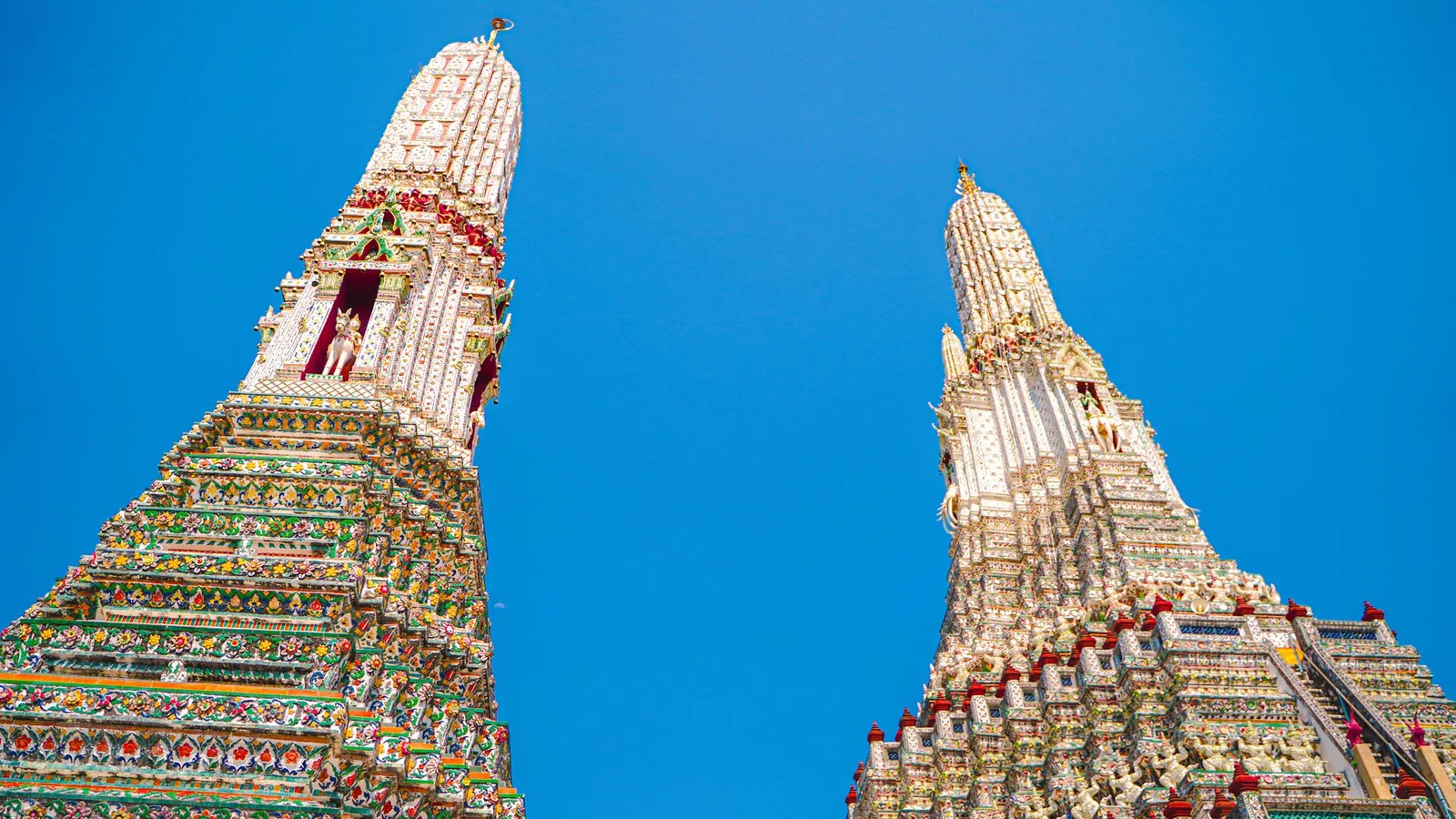
Photo: phiraphon srithakae / Pexels
Visa and entry
According to the Royal Thai Embassy in Helsinki (notice imported onto the page on 1 September 2026), from 15 September 2026 holders of an ordinary Finnish passport receive visa-exempt tourism for up to 30 days. The exemption is for tourism only. It may be used at most twice per calendar year, regardless of how you enter or leave.
At the border you must be able to show planned departure within 30 days (a confirmed flight, train, bus or ferry ticket). Otherwise a visa must be obtained in advance. Anyone using the tourism exemption must also have cash or the equivalent of at least 20,000 baht per person or 40,000 baht per family.
The Ministry for Foreign Affairs (travel advice 3 November 2026) and the embassy require the passport to be valid for six months from arrival and in good condition. According to the embassy a temporary or emergency passport may be accepted, but it must be valid for at least six months when you return to your country of residence.
All non-Thai nationals must complete the free Thailand Digital Arrival Card (TDAC) before arrival, according to the embassy three days in advance. Official address: tdac.immigration.go.th. TDAC is not a visa.
The 60-day visa exemption was withdrawn in the 15 September 2026 reform. For a longer stay you need an appropriate visa, for example through Thailand’s e-visa system. Check classes and conditions with the authorities; visa prices are not listed here without a current official tariff.
Sources: Royal Thai Embassy, Helsinki, Ministry for Foreign Affairs, Thailand.
Vaccinations and health
Terveyskirjasto’s traveller health guide (Thailand, 18 November 2024) recommends contacting healthcare preferably one to two months before travel. Check your basic cover (tetanus and diphtheria, MMR). Hepatitis A vaccine is recommended.
Items considered case by case include hepatitis B (mainly in blood exposure or study), typhoid on a longer stay outside tourist areas, and Japanese encephalitis if you stay in rural areas, especially in May–October. Rabies vaccine can be considered for some travellers; after an animal bite you should still seek care. Protect yourself against dengue mosquitoes in the daytime as well; the vaccine is relevant only under certain conditions.
Malaria prophylaxis is not needed according to the guide, but mosquito protection is important. The risk is low in tourist areas and large cities; a little higher near the borders with Myanmar and Cambodia. Do not drink tap water. The European Health Insurance Card does not cover Thailand. Source: Terveyskirjasto, Thailand. This does not replace a doctor’s assessment.
Money, cards and ATMs
The currency is the baht (THB). Tell your bank about the trip, take at least two cards from different schemes, and decline dynamic currency conversion at the ATM or till unless you have a strong reason not to. A local withdrawal fee is common; check your bank’s terms for foreign purchases. Do not keep all cards and cash in the same place.
Flights and stays: [AFFILIATE]. A card with inexpensive foreign withdrawals: [AFFILIATE].
Internet and eSIM
Install and test an eSIM while still in Finland, so the connection works at the airport. The alternative is a local prepaid SIM. Make sure you can reach banking apps even without a Finnish text message, if the bank requires it for authentication. eSIM: [AFFILIATE].
Plugs are typically types A, B, C or O, mains voltage 220 V. Most modern chargers accept 100–240 V; you will still often need an adapter.
Insurance
The Ministry for Foreign Affairs always recommends travel insurance. Check that it covers Thailand, any remote work, evacuation and the activities you plan to do. Ordinary travel insurance is usually not enough for a long stay. Compare the terms yourself. Travel insurance: [AFFILIATE]. Insurance for a longer stay: [AFFILIATE].
Safety
The Ministry’s general level is “exercise normal precautions” (notice 3 November 2026). Avoid unnecessary travel to the provinces of Yala, Songkhla, Pattani and Narathiwat and to the Thailand–Cambodia border area. There were clashes in the border area in the summer and in December 2025; land-border crossings may be closed, and the situation can change quickly. On the islands of Koh Chang, Koh Kood and Koh Mak the Ministry urges particular caution.
Pickpocketing occurs especially on Bangkok’s BTS and MRT. The emergency number is 191. Make a travel notification. Source: Ministry for Foreign Affairs, Thailand.
Etiquette
The royal family, Buddhist images and temples are treated with respect. Dress modestly at shrines, remove your shoes, do not point your feet at a Buddha image and do not touch someone else’s head. Do not raise your voice in a dispute. Drug offences carry severe penalties. Lèse-majesté law is strict; avoid criticising the royal family, including online.
Indicative costs
Numbeo user estimate (Bangkok, update 21 November 2026, 1,631 observations): monthly costs for one person excluding rent about USD 693, an inexpensive meal about 100 baht, a studio in the centre on average about 23,900 baht a month. This is not official statistics, and area, standard and season have a strong effect. On a short holiday the budget is driven more by flights and accommodation than by a monthly estimate.
Read a longer article: Thailand visas for Finnish passport holders in 2026
Doctors, pharmacies and your own medicines
Seeing a doctor
Bangkok, Phuket and Chiang Mai have many private hospitals and clinics used to international care. You can often be seen the same day if you pay yourself or your insurer issues a guarantee of payment. Prices vary widely; ask for an estimate in advance. In rural areas and on smaller islands services are more limited, and in serious cases the patient is evacuated to a larger city. The European Health Insurance Card does not cover Thailand.
Pharmacies
Pharmacies are dense in tourist areas, and the range is wide. Some products that are prescription-only in Finland may be sold more loosely — that does not mean self-treatment is safe. There is a risk of counterfeit medicines: buy from a known, licensed pharmacy, not from street stalls, and keep the receipt. Quality cannot be judged from the look of the pack alone.
Bringing your own prescription medicines
Thailand’s FDA (Narcotics Control Division) distinguishes ordinary medicines from controlled narcotic or psychotropic substances. Ordinary prescription medicines for personal use can usually be brought in when you have a prescription or a doctor’s statement and the quantity matches your treatment.
Psychotropic substances (Narcotics Code, classes II–IV): up to a 30-day supply with a prescription or doctor’s certificate, without a separate permit. A 31–90-day supply requires an FDA permit (form IC-2), applied for online at least 15 days before travel: permitfortraveler.fda.moph.go.th. Narcotics (classes II–III) require a permit, up to a maximum of 90 days. Class I substances are prohibited. Present the permit, the medicines and the doctor’s papers on request at customs on the red channel.
Clonazepam, clobazam, other benzodiazepines and phenobarbital are controlled substances in many countries. Check your own product in the Thai FDA substance search, because the class decides whether a prescription is enough or an IC-2 permit is required. The Ministry for Foreign Affairs notes that drug offences carry severe penalties in Thailand.
General tips if you travel with prescription medicines
- Keep medicines in their original packaging and carry them in your hand luggage, not in checked baggage.
- Take a little extra in case a flight is delayed or a pack goes missing — but do not exceed the amount the destination country allows.
- How the time zone affects dosing should be agreed with your treating doctor in advance. This page does not give dosing advice.
- Check that your travel insurance covers a sudden worsening of a pre-existing condition and evacuation. Terms from Finnish insurers vary; declare the condition honestly and ask for written confirmation if needed. The Ministry for Foreign Affairs always recommends checking the cover, especially if you have an illness.
- Kela usually reimburses medicines from a pharmacy for a maximum of three months at a time (for an expensive medicine, a maximum of one month). This applies to people resident in Finland. Source: Kela, Medicines and travel.
- A Finnish electronic prescription works only in certain EU countries, not in Asia. For Asia you usually need paper documents (a prescription or a doctor’s statement, preferably in English). Source: Kanta.fi (page updated 6 March 2026) and EU-terveydenhoito.fi.
- The Schengen certificate available from a pharmacy applies only to the Schengen area and to at most 30 days of medication. It is not valid in these Asian countries. Source: Fimea, Schengen certificate.
Example: more than one epilepsy medicine
If you take several medicines long term — for example three epilepsy medicines — establish the active substance of each product separately. Some epilepsy medicines, such as benzodiazepines (for example clonazepam and clobazam) and phenobarbital, are classified as controlled substances in many countries. A Finnish prescription is then not always enough: you may need advance permission, strict quantity limits, a customs declaration or a doctor’s certificate in English. Do not change or stop your medication on your own; agree a plan with your doctor and check the list with the destination country’s authorities.
Sources: Thai FDA, Guidance for Travelers carrying narcotic or psychotropic medicines (ministerial regulation, in force from 21 September 2024), Thai FDA, substance search and quantity limits, Ministry for Foreign Affairs, Thailand, Kela, Fimea, Kanta.fi.
Weather month by month
In Thailand the dry season and the rainy season vary by region. On the mainland and the Andaman Sea islands (Phuket, Krabi, Lanta) rain usually falls mainly from May to October. On the Gulf of Thailand islands (Samui, Phangan, Tao) the heaviest rain typically comes later, from October to December — so do not assume that the “island season” is the same along the whole coast.
The rainfall classification is the site’s own, based on monthly rainfall, so the tables can be compared. The figures are long-term averages (not a forecast for a single year). Information checked on 22 November 2026.
North (Chiang Mai)
| Month | Mean daily maximum | Rainfall | Note |
|---|---|---|---|
| Jan | 30 °C | Light11.3 mm | — |
| Feb | 32.9 °C | Light9.6 mm | — |
| Mar | 35.4 °C | Light20.4 mm | Very hot |
| Apr | 36.7 °C | Light54.3 mm | Very hot |
| May | 34.7 °C | Moderate167.5 mm | Rainy season begins |
| Jun | 33.2 °C | Moderate118.2 mm | — |
| Jul | 32.1 °C | Moderate148.6 mm | — |
| Aug | 31.6 °C | Heavy223.3 mm | Rainy season |
| Sep | 32 °C | Heavy207.2 mm | Rainy season |
| Oct | 31.7 °C | Moderate123.8 mm | — |
| Nov | 30.8 °C | Light40.9 mm | — |
| Dec | 29.2 °C | Light14.1 mm | — |
Best months for general travel (marked with a gold line in the table): Nov, Dec, Jan, Feb. “Best” usually means drier, more comfortable weather; diving, hiking or winter sports may favour other months.
Source: Wikipedia climate table, Chiang Mai (1991–2020), citing the World Meteorological Organization (normals based on national measurements).
Bangkok
| Month | Mean daily maximum | Rainfall | Note |
|---|---|---|---|
| Jan | 32.7 °C | Light23.6 mm | — |
| Feb | 33.7 °C | Light21.4 mm | — |
| Mar | 34.7 °C | Light51 mm | — |
| Apr | 35.7 °C | Moderate93.3 mm | Hottest period |
| May | 35.1 °C | Heavy216.8 mm | Rainy season |
| Jun | 34.1 °C | Moderate198.5 mm | — |
| Jul | 33.5 °C | Moderate189.7 mm | — |
| Aug | 33.3 °C | Heavy227.1 mm | — |
| Sep | 33.2 °C | Heavy335.9 mm | Wettest month |
| Oct | 33.3 °C | Heavy288.7 mm | Rainy season |
| Nov | 33.1 °C | Light44.6 mm | — |
| Dec | 32.3 °C | Light11.6 mm | — |
Best months for general travel (marked with a gold line in the table): Nov, Dec, Jan, Feb. “Best” usually means drier, more comfortable weather; diving, hiking or winter sports may favour other months.
Source: Wikipedia climate table, Bangkok Metropolis (1991–2020), citing NOAA and the Thai Meteorological Department.
Andaman Sea (Phuket)
| Month | Mean daily maximum | Rainfall | Note |
|---|---|---|---|
| Jan | 32.7 °C | Light30.3 mm | — |
| Feb | 33.6 °C | Light23.9 mm | — |
| Mar | 34 °C | Light73.5 mm | — |
| Apr | 33.9 °C | Moderate142.9 mm | — |
| May | 32.8 °C | Heavy259.5 mm | Southwest monsoon |
| Jun | 32.4 °C | Heavy213.3 mm | — |
| Jul | 32 °C | Heavy258.2 mm | — |
| Aug | 32 °C | Heavy286.8 mm | — |
| Sep | 31.5 °C | Heavy361.2 mm | Wettest month |
| Oct | 31.5 °C | Heavy320.1 mm | Monsoon |
| Nov | 31.7 °C | Moderate177.4 mm | — |
| Dec | 31.7 °C | Light72.4 mm | — |
Best months for general travel (marked with a gold line in the table): Dec, Jan, Feb, Mar. “Best” usually means drier, more comfortable weather; diving, hiking or winter sports may favour other months.
Source: Wikipedia climate table, Mueang Phuket (1981–2010), citing the Thai Meteorological Department.
On the Gulf of Thailand islands (for example Ko Samui) the pattern is different: according to a WMO-based table the wettest period is typically October–December (in November on average more than 400 mm), and the driest is often February. Source: Wikipedia, Ko Samui, WMO.