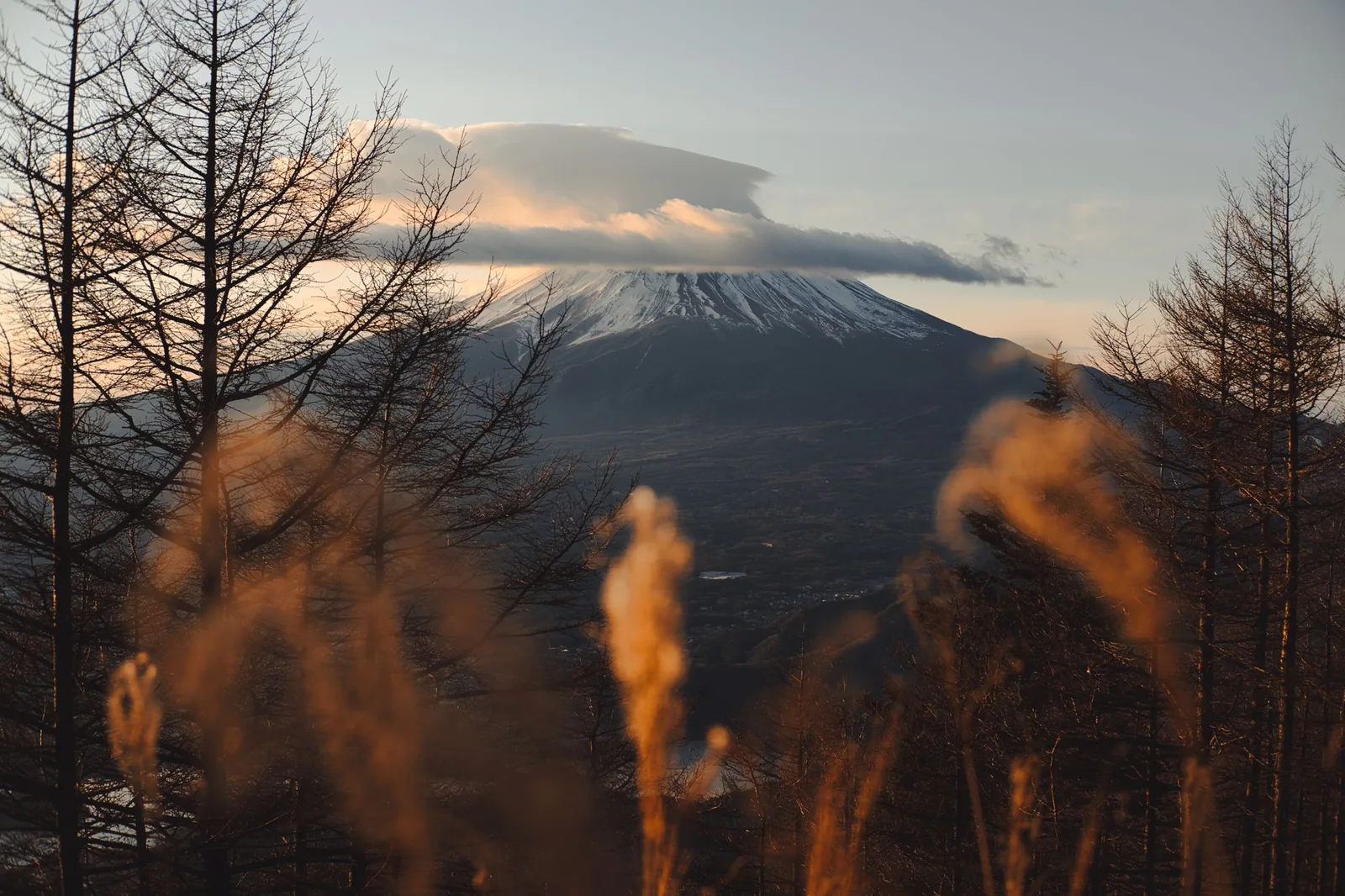
Country guide
Japan
Visa exemption, 100-volt power, etiquette, and why evacuation and earthquake readiness belong in your preparations.
Updated 22 November 2026 (Europe/Helsinki).
Photo: Evgeny Tchebotarev / Pexels
Visa and entry
According to Japan’s Ministry of Foreign Affairs and the embassy in Helsinki, a Finnish citizen may enter without a visa for up to 90 days for tourism, a visit or short business that does not include paid work. Admission is still decided at the border. The passport must be valid at the time of entry; the embassy recommends that it covers the whole stay. Sources: MOFA, visa exemption, Embassy of Japan in Finland.
Paid work or a stay of more than 90 days requires an appropriate residence status. Owning property is not a visa.
Visit Japan Web (services.digital.go.jp) is Japan’s official, free pre-registration for entry and customs. It speeds arrival with a QR code, but is not, based on this research, an absolute requirement: paper forms are usually still an option. Check the situation before you travel, because practice can change.
Vaccinations and health
Terveyskirjasto (Japan, 25 March 2024) does not routinely recommend hepatitis A for everyone, unlike in our four other countries. Basic cover should be checked. Japanese encephalitis vaccine is considered if you stay in rural areas in the disease season (highest risk July–October; except Hokkaidō). Tick-borne encephalitis has occurred regionally; the vaccine is mainly relevant on a longer stay in nature in risk areas. Hygiene standards are good. Source: Terveyskirjasto, Japan.
Money, cards and ATMs
The currency is the yen (JPY). Card acceptance has improved, but cash is still needed in some eateries and small shops. ATMs in convenience stores (konbini) and at the post office accept many international cards. Tell your bank. A Suica, Pasmo or visitor card makes public transport easier. Stays: [AFFILIATE]. Card: [AFFILIATE].
Internet, power and eSIM
An eSIM usually works as soon as you land. eSIM: [AFFILIATE]. Mains voltage is 100 V, plugs type A or B (two flat pins, often ungrounded). Most laptop chargers accept 100–240 V; check the label on the device. Hairdryers and other heating appliances intended only for 230 V will not work without a transformer.
Insurance
The Ministry recommends comprehensive travel insurance. Healthcare is high quality but can be expensive without insurance. Travel insurance: [AFFILIATE].
Safety
Ministry (3 November 2026): “exercise normal precautions”. Japan is largely safe; the greatest risk relates to earthquakes, tsunamis and typhoons (especially June–October). Download the authorities’ Safety Tips app and follow the Japan Meteorological Agency. Crime against travellers is low, but the Ministry warns about substances mixed into drinks in certain Tokyo areas (including Kabukicho, Shibuya, Roppongi). A foreigner must carry a passport. The drink-driving limit is 0 blood alcohol. The police emergency number is 110. Source: Ministry for Foreign Affairs, Japan.
Etiquette
Trains are quiet; calls are taken elsewhere. People queue, shoes come off when asked, eating while walking is less free than in many other countries, and tipping is usually not done. Bins are scarce; carry your rubbish with you. Do not eat or drink in a metro carriage unless local practice clearly allows it.
Indicative costs
Numbeo user estimate (Tokyo, update 20 November 2026): monthly costs for one person excluding rent about USD 879, an inexpensive meal about 1,200 yen, a studio in the centre on average about 207,000 yen a month. Japan is clearly the most expensive of the original five countries, and moving often involves large upfront payments. Not official statistics. The yen–euro rate has a strong effect on the budget.
Doctors, pharmacies and your own medicines
Seeing a doctor
Japan’s healthcare is, according to the Ministry for Foreign Affairs, of high quality but can be expensive without insurance. Large cities (Tokyo, Osaka, Fukuoka, Sapporo) have hospitals and clinics with experience of foreign patients; still allow for appointments and a language barrier. In rural areas and on smaller islands specialist care is thinner. A published “average price” for a consultation is not stated here, because it varies by facility; ask for an estimate and make sure the insurer will issue a guarantee of payment.
Pharmacies
Pharmacies (yakkyoku) are dense, and prescription medicines are usually dispensed on a doctor’s order. Quality control is strict, and the risk of counterfeits is lower than in many South-East Asian tourist destinations. Still do not assume that a Finnish prescription will be accepted at the pharmacy: a local doctor may have to write a new order.
Bringing your own prescription medicines
Japan’s Ministry of Health, Labour and Welfare (MHLW) distinguishes ordinary medicines from controlled substances. Ordinary prescription medicine: up to a one-month supply for personal use does not usually require an Import Confirmation (Yakkan Shoumei) obtained in advance. A prescription supply of more than one month requires Yakkan Shoumei, applied for before departure: impconf.mhlw.go.jp. Some products are banned altogether.
Narcotics and stimulant raw materials (for example morphine, fentanyl, oxycodone, codeine; lisdexamfetamine, pseudoephedrine): import without a permit obtained in advance is prohibited. The permit is applied for from the Narcotics Control Department; the application should be submitted in good time (the guidance says at least 14 days, and earlier around the turn of the year). Some products are banned altogether, even if they are prescription medicines at home. Source: NCD, Application Guidance and MHLW, bringing medicines for personal use.
Psychotropic substances (NCD mentions, among others, clonazepam and diazepam as examples; the table also includes clobazam and phenobarbital): advance permission is not required if you carry tablets or a form other than an injection up to the amount stated in the table. If the amount exceeds the limit — or if it is an injection — you need a doctor’s certificate stating the illness, the need for treatment, the names of the substances and the quantities. Thresholds in the table (checked 22 November 2026, Kinki Bureau / MHLW): clonazepam 180 mg, clobazam 2.4 g, phenobarbital 6 g, diazepam 1.2 g. Example: 2 mg of clonazepam a day exceeds the 180 mg limit in about three months, so even a “Kela three-month supply” may require a certificate. Source: MHLW, threshold quantities for psychotropic substances.
If you take three epilepsy medicines to Japan, some of them ordinary prescription medicines and one psychotropic, you often need both Yakkan Shoumei (if the supply exceeds one month) and a check of the psychotropic threshold. Do not send medicines by post or have someone else carry them: the NCD requires the patient to carry controlled medicines themselves.
General tips if you travel with prescription medicines
- Keep medicines in their original packaging and carry them in your hand luggage, not in checked baggage.
- Take a little extra in case a flight is delayed or a pack goes missing — but do not exceed the amount the destination country allows.
- How the time zone affects dosing should be agreed with your treating doctor in advance. This page does not give dosing advice.
- Check that your travel insurance covers a sudden worsening of a pre-existing condition and evacuation. Terms from Finnish insurers vary; declare the condition honestly and ask for written confirmation if needed. The Ministry for Foreign Affairs always recommends checking the cover, especially if you have an illness.
- Kela usually reimburses medicines from a pharmacy for a maximum of three months at a time (for an expensive medicine, a maximum of one month). This applies to people resident in Finland. Source: Kela, Medicines and travel.
- A Finnish electronic prescription works only in certain EU countries, not in Asia. For Asia you usually need paper documents (a prescription or a doctor’s statement, preferably in English). Source: Kanta.fi (page updated 6 March 2026) and EU-terveydenhoito.fi.
- The Schengen certificate available from a pharmacy applies only to the Schengen area and to at most 30 days of medication. It is not valid in these Asian countries. Source: Fimea, Schengen certificate.
Example: more than one epilepsy medicine
If you take several medicines long term — for example three epilepsy medicines — establish the active substance of each product separately. Some epilepsy medicines, such as benzodiazepines (for example clonazepam and clobazam) and phenobarbital, are classified as controlled substances in many countries. A Finnish prescription is then not always enough: you may need advance permission, strict quantity limits, a customs declaration or a doctor’s certificate in English. Do not change or stop your medication on your own; agree a plan with your doctor and check the list with the destination country’s authorities.
Sources: MHLW, bringing medicines for personal use, Yakkan Shoumei / Import Confirmation, Narcotics Control Department, Application Guidance, MHLW, psychotropic threshold quantities, Ministry for Foreign Affairs, Japan, Kela, Fimea, Kanta.fi.
Weather month by month
Japan’s climate varies widely. Hokkaidō has snowy winters, Tokyo has four seasons and a tsuyu rainy season in early summer, and Okinawa has a subtropical, humid climate and a longer typhoon season. Typhoons typically occur especially from June to October; check the situation with the Japan Meteorological Agency before you travel.
The rainfall classification is the site’s own, based on monthly rainfall, so the tables can be compared. The figures are long-term averages (not a forecast for a single year). Information checked on 22 November 2026.
Tokyo
| Month | Mean daily maximum | Rainfall | Note |
|---|---|---|---|
| Jan | 9.8 °C | Light59.7 mm | — |
| Feb | 10.9 °C | Light56.5 mm | — |
| Mar | 14.2 °C | Moderate116 mm | — |
| Apr | 19.4 °C | Moderate133.7 mm | — |
| May | 23.6 °C | Moderate139.7 mm | — |
| Jun | 26.1 °C | Moderate167.8 mm | Tsuyu / early-summer rain |
| Jul | 29.9 °C | Moderate156.2 mm | Hot and humid |
| Aug | 31.3 °C | Moderate154.7 mm | Hot, typhoon risk |
| Sep | 27.5 °C | Heavy224.9 mm | Typhoon and rainy season |
| Oct | 22 °C | Heavy234.8 mm | Rainy, typhoon risk |
| Nov | 16.7 °C | Moderate96.3 mm | — |
| Dec | 12 °C | Light57.9 mm | — |
Best months for general travel (marked with a gold line in the table): Mar, Apr, May, Oct, Nov. “Best” usually means drier, more comfortable weather; diving, hiking or winter sports may favour other months.
Source: Wikipedia climate table, Tokyo, citing the Japan Meteorological Agency (see also Wikipedia, Tokyo).
Okinawa (Naha)
| Month | Mean daily maximum | Rainfall | Note |
|---|---|---|---|
| Jan | 19.8 °C | Moderate101.6 mm | Humid year-round |
| Feb | 20.2 °C | Moderate114.5 mm | Humid year-round |
| Mar | 21.9 °C | Moderate142.8 mm | Humid year-round |
| Apr | 24.3 °C | Moderate161 mm | Humid year-round |
| May | 27 °C | Heavy245.3 mm | Wetter period |
| Jun | 29.8 °C | Heavy284.4 mm | Rainy, typhoon risk |
| Jul | 31.9 °C | Moderate188.1 mm | Humid year-round |
| Aug | 31.8 °C | Heavy240 mm | Typhoon risk |
| Sep | 30.6 °C | Heavy275.2 mm | Typhoon and rainy season |
| Oct | 28.1 °C | Moderate179.2 mm | Humid year-round |
| Nov | 25 °C | Moderate119.1 mm | Humid year-round |
| Dec | 21.5 °C | Moderate110 mm | Humid year-round |
Best months for general travel (marked with a gold line in the table): Nov, Dec, Jan, Feb, Mar, Apr. “Best” usually means drier, more comfortable weather; diving, hiking or winter sports may favour other months.
Source: Wikipedia climate table, Naha, citing the Japan Meteorological Agency (see Wikipedia, Naha).
Hokkaidō (Sapporo)
| Month | Mean daily maximum | Rainfall | Note |
|---|---|---|---|
| Jan | 0.4 °C | Moderate108.4 mm | Winter, much of the precipitation as snow |
| Feb | 0.4 °C | Moderate91.9 mm | Winter, snow |
| Mar | 4.5 °C | Light77.6 mm | — |
| Apr | 11.7 °C | Light54.6 mm | — |
| May | 17.9 °C | Light55.5 mm | — |
| Jun | 21.8 °C | Light60.4 mm | — |
| Jul | 25.4 °C | Moderate90.7 mm | — |
| Aug | 26.4 °C | Moderate126.8 mm | — |
| Sep | 22.8 °C | Moderate142.2 mm | Wetter autumn |
| Oct | 16.4 °C | Moderate109.9 mm | — |
| Nov | 8.7 °C | Moderate113.8 mm | — |
| Dec | 2 °C | Moderate114.5 mm | Winter, snow |
Best months for general travel (marked with a gold line in the table): May, Jun, Jul, Aug, Sep. “Best” usually means drier, more comfortable weather; diving, hiking or winter sports may favour other months.
Source: Wikipedia climate table, Sapporo (1991–2020), citing the Japan Meteorological Agency (see Wikipedia, Sapporo). For winter travel (skiing) the best months are often December–February, even though they are not mild-weather months.